

Commercial Kitchen Fit Out Rules: What You Must Get Right
Few things are more stressful than finding out right before opening that your kitchen won’t be approved. Missing hand basins, non-compliant drainage or undersized exhaust can mean rework, delays and major extra costs, all because commercial kitchen fit out rules weren’t built into the design from the start.
In Brisbane, a “commercial kitchen” isn’t just for restaurants. The same compliance lens often applies to shops, daycare centres, offices and mixed-use spaces anywhere food is prepared for customers, children, visitors or larger teams. Getting that definition right early shapes your approvals, layout, finishes and equipment choices.
This guide from
Laity Building gives you a practical overview of the key requirements for commercial kitchen fit out, and the real-world commercial kitchen fit out considerations to work through before you order equipment or start demolition, so your project can move smoothly from concept to opening.
What Actually Counts as a “Commercial Kitchen”?
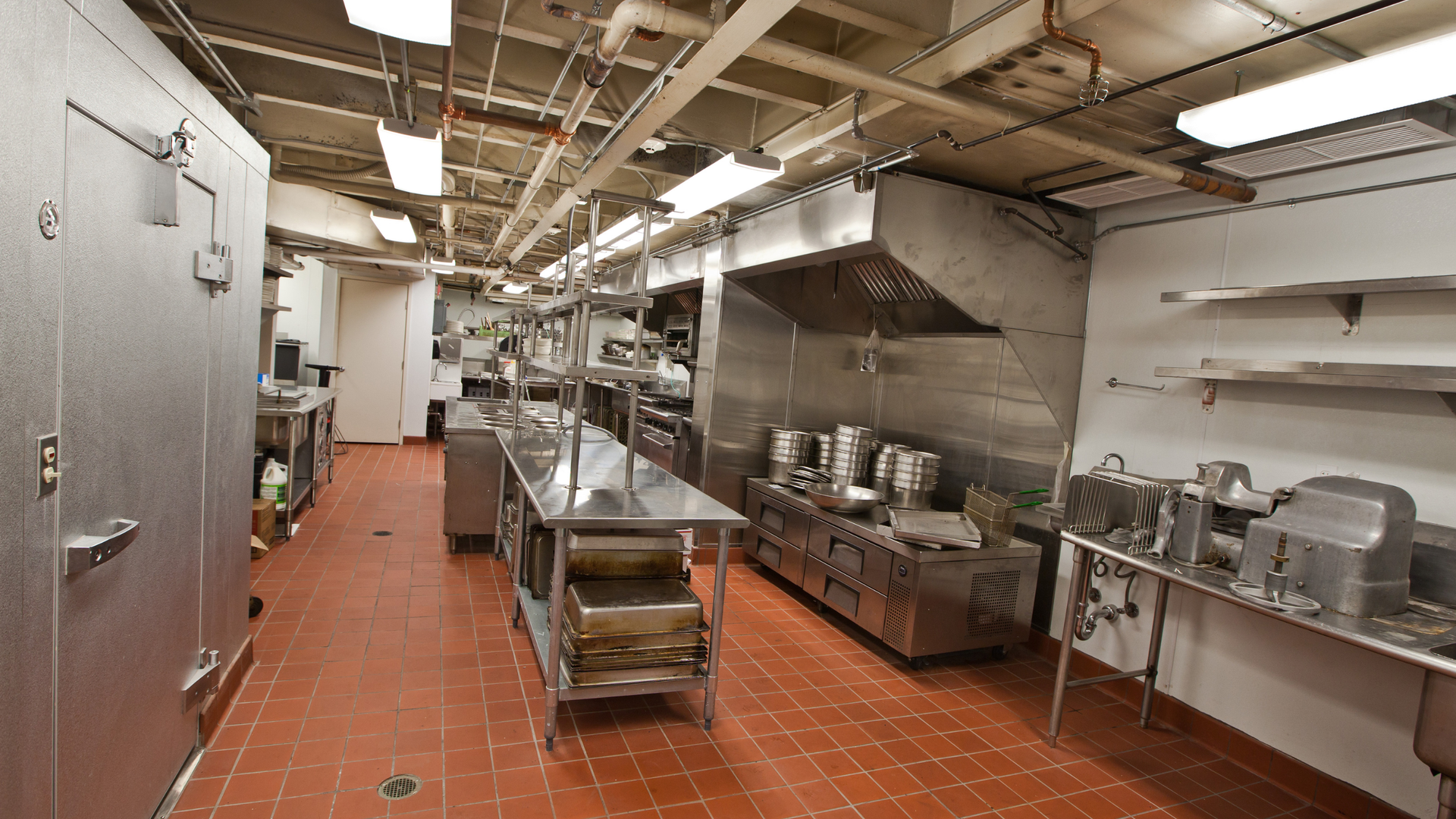
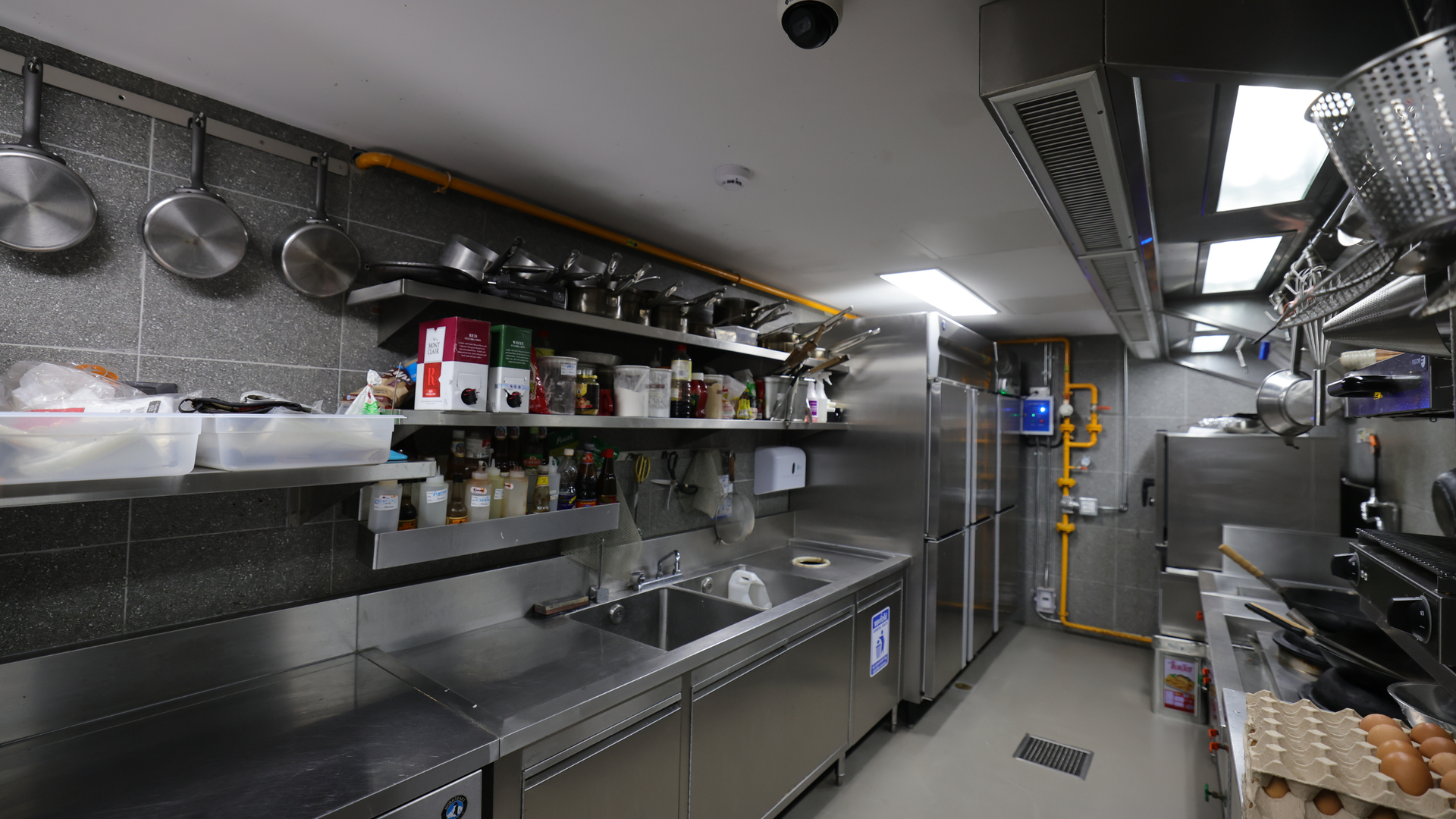
Step one is understanding whether your space will be treated as a simple staff kitchenette or a regulated food premises, a true commercial kitchen. That decision determines which approvals apply and how closely your layout, finishes and services will be assessed against the relevant commercial kitchen standards and compliance requirements.
Staff kitchenette vs food premises
A small, staff-only tea room with a sink, fridge and microwave is usually low risk. Once you introduce hot food preparation, higher volumes or food served to the public, regulators are more likely to classify the space as a food premises and assess it against formal hygiene and building rules.
Special cases to watch
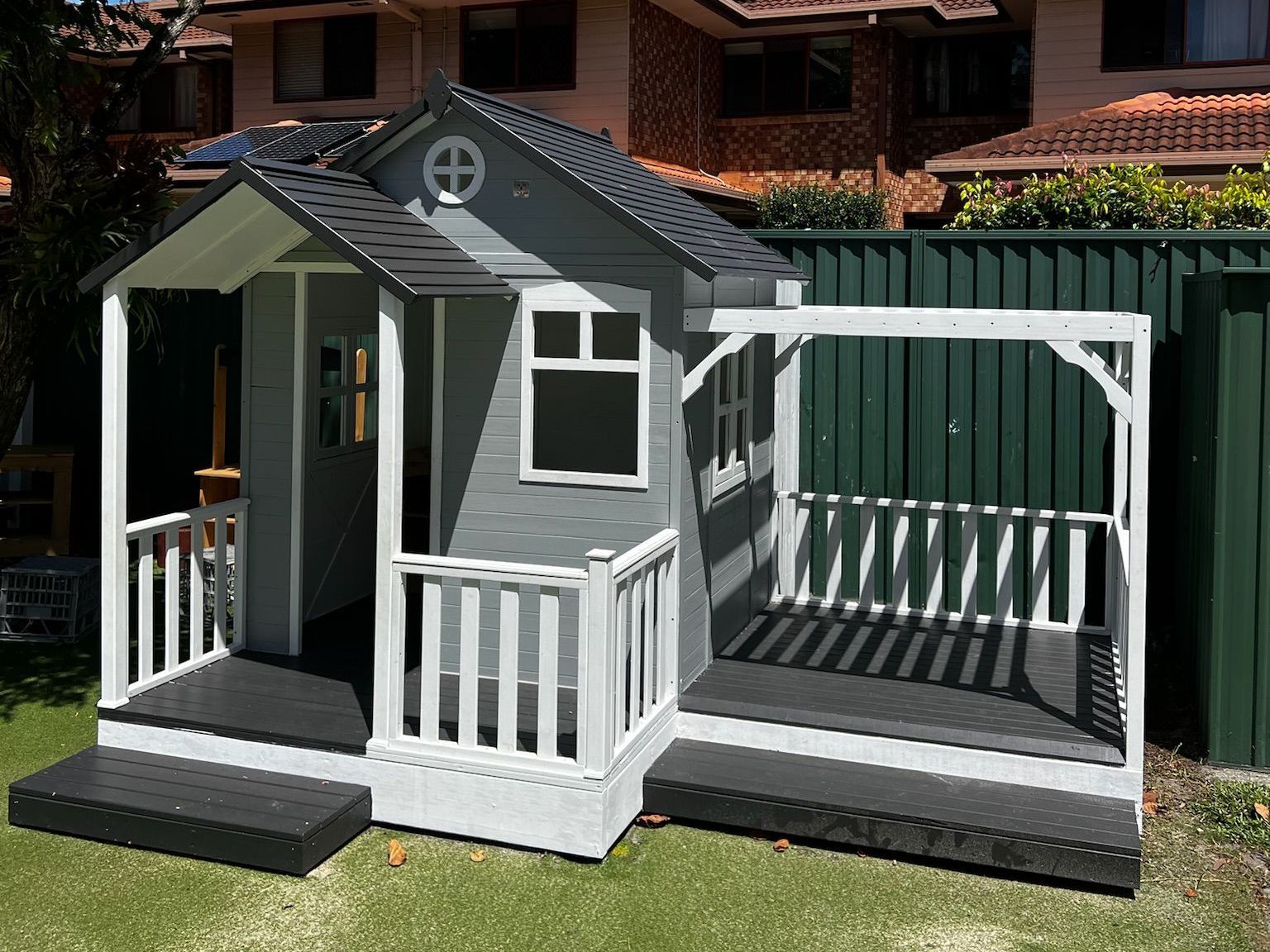
- Daycare and childcare food prep. Food for children attracts closer scrutiny around handwashing, refrigeration, zoning and workflow. For a broader look at childcare environments, see our childcare centre design and fit out ideas.
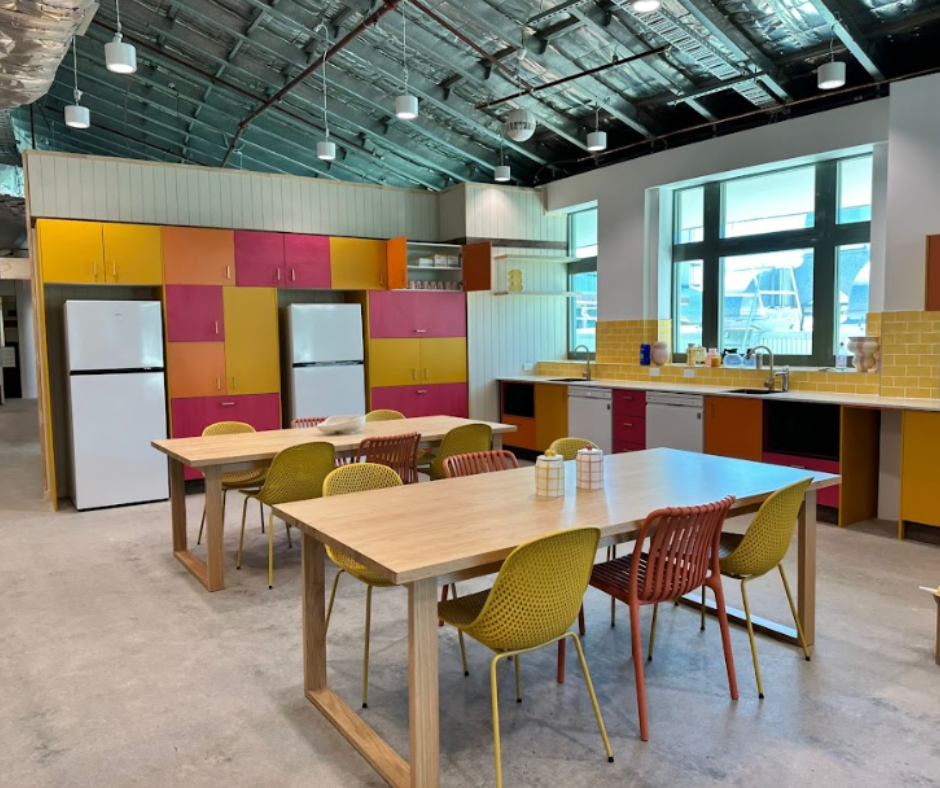
- Office or co-working kitchens for larger teams. When a “kitchenette” supports dozens of people or regular catering, it can be treated more like a commercial kitchen.
- Retail spaces with food prep. In-store cafés, supermarket bakeries and grab-and-go counters often trigger full commercial kitchen fit out considerations. These spaces are often part of a broader retail shop fit out..
If you’re unsure how your kitchen will be classified, check with the council or your building certifier before locking in the design.
Core Commercial Kitchen Fit Out Rules
In Brisbane and across Queensland, food premises must be designed so they can be kept clean, protect food from contamination and provide a safe workplace. These commercial kitchen fit out rules sit at the heart of your overall design and form part of the broader requirements for commercial kitchen fit out.
Food Premises and Equipment Requirements
Your plans should clearly address:
- Cleanable finishes. Smooth, durable, non-absorbent floors, walls and benches that handle heavy use and regular cleaning.
- Adequate space, lighting and ventilation. Safe circulation, good visibility and air quality that keeps heat, steam and smoke under control.
- Safe water, drainage and wastewater disposal. Potable water, correct falls where needed and compliant trade waste/grease management.
- Garbage and recycling storage. Dedicated, accessible storage away from food prep areas, with easy wash-down.
- Hand-washing facilities. Dedicated hand basins in food zones, correctly located, unobstructed and supplied with warm water, soap and drying.
You should be able to point to each of these on your drawings. If not, revisit your design before progressing.
Building Code, Fire Safety and Ventilation
You also need to meet building and fire obligations and obtain the right approvals, often including specific fit out permits, before any construction starts.
- Confirm the building’s classification and any required fire-resistant construction around the kitchen.
- Design mechanical exhaust and make-up air to suit your cooking load, with practical duct routes and compliant discharge points.
- Maintain clear escape paths and allow for any required fire suppression on specific appliances or under hoods.
Exhaust design and duct routes are some of the most important commercial kitchen fit out considerations to resolve early; changing them later is disruptive and costly.
Workplace Health & Safety and Ergonomics
A compliant kitchen must also be safe to work in:
- Slip-resistant floors and clear walkways to minimise falls, even when floors are wet or greasy.
- Ergonomic bench heights and reach zones to reduce bending, twisting and awkward lifting.
- Accessibility where the kitchen adjoins public areas or is used by a diverse team.
Thinking about safety at the design stage is far more effective than trying to retrofit solutions once the kitchen is operating.
Practical Design Considerations
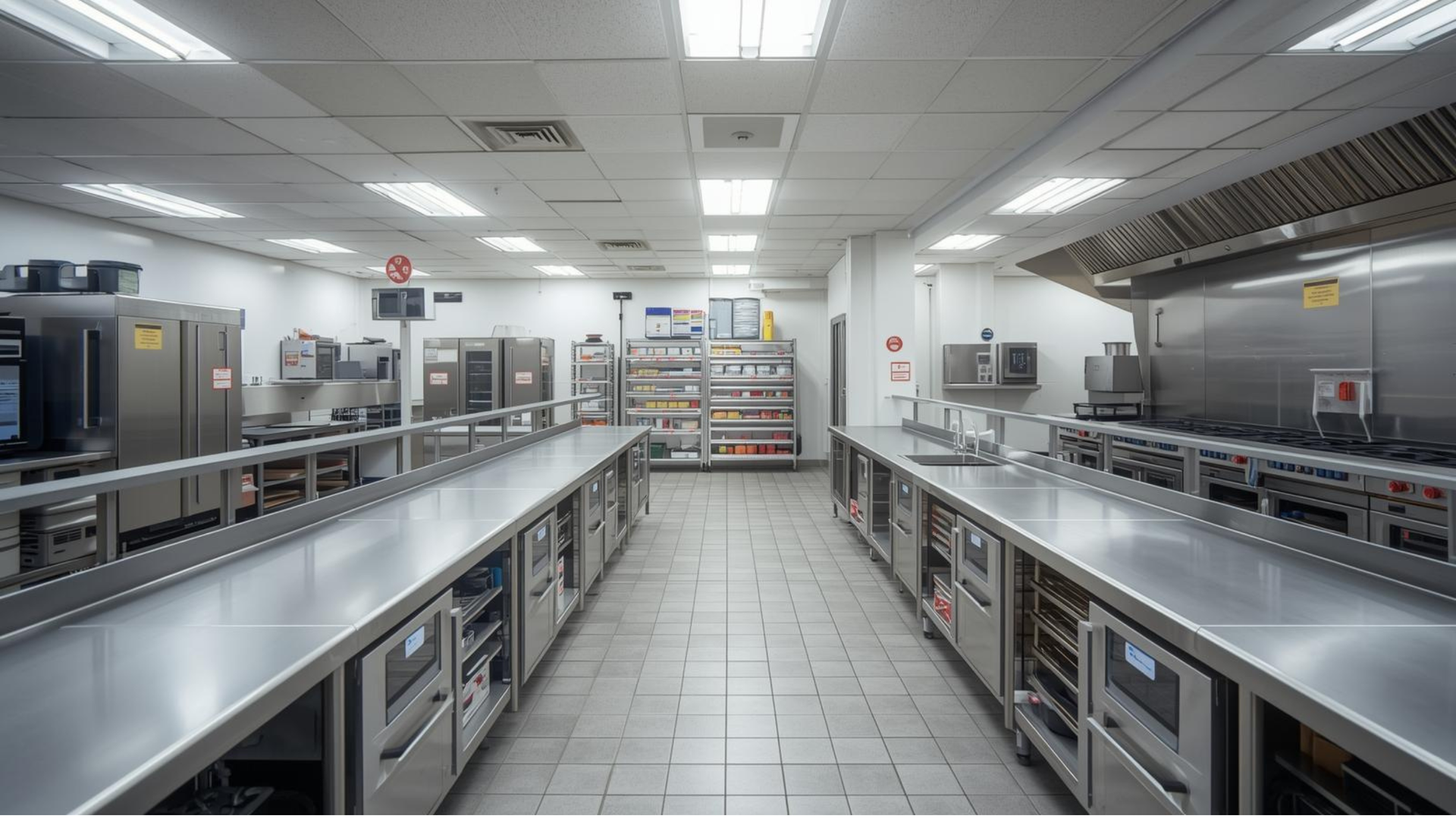
Once you’re clear on the rules, you can shape a kitchen that’s compliant, efficient and pleasant to work in. This is where many of your day-to-day commercial kitchen fit out considerations come into play.
Layout, Workflow and Zoning
Aim for a logical, mostly one-way flow:
- Delivery & storage → prep → cook → serve → clean-down & waste
- Keep raw and ready-to-eat foods separated.
- Avoid dirty items crossing paths with clean dishes.
In smaller offices, daycare or retail spaces, use benches, shelving and equipment placement to create compact but clearly defined zones that support this flow. These principles also apply when you’re planning a daycare kitchen, a retail food outlet or a small office kitchen as part of a broader commercial fit out for your business.
Floors, Walls, Ceilings and Finishes
The building fabric carries a lot of the hygiene load:
- Floors are impervious, non-slip and, where needed, graded to floor wastes for regular wash-down.
- Walls have smooth, washable surfaces to suitable heights behind cook lines, sinks and prep benches.
- Ceilings use sealed, easy-to-clean systems with no exposed rafters or dust-catching ledges in food zones.
- Junctions and penetrations are detailed where floors, walls, benches and services meet so they can be cleaned properly and don’t harbour pests.
Ventilation, Lighting and Services
Services design underpins comfort and compliance:
- Design exhaust and make-up air to manage heat, steam, smoke and odours while respecting neighbouring tenancies.
- Provide strong task lighting over cook lines, prep and wash areas, with softer general lighting elsewhere.
- Lock in locations and capacities for gas, power, water, drainage and grease management early, based on your proposed equipment.
A simple services checklist before going to tender can prevent many variations later.
Storage, Waste and Staff Areas
Support spaces are easy to overlook but critical in day-to-day operations:
- Size dry, refrigerated and frozen storage for your menu, service volumes and delivery frequency.
- Allow organised waste, recycling and oil storage away from clean areas, with safe access for collection.
- Provide staff amenities and storage for personal items and uniforms so they don’t spill into food preparation zones.
Equipment Requirements and Selection
Equipment choices affect hygiene, safety, performance and running costs and must work hand-in-hand with the requirements for commercial kitchen fit out.
Minimum Equipment for Compliance
Most commercial kitchens will need at least:
- Dedicated hand-wash basin(s) in food prep zones.
- A compliant dishwashing/utensil-washing setup (commercial dishwasher or correctly configured sinks).
- Adequate refrigeration and freezer capacity with reliable temperature control and monitoring.
- Food-safe benches, shelving and storage that are robust and easy to clean.
These basics support safe food handling regardless of your food offer.
Commercial vs Domestic Equipment
Domestic appliances are rarely ideal for true commercial use:
- They’re not built for long hours, heavy loads or frequent deep cleaning.
- Performance can drop at peak times, affecting food safety and service.
In very small, low-risk staff-only kitchens, domestic appliances might be acceptable. For cafés, childcare kitchens, hospitality and retail food prep, commercial-grade equipment is usually the safer and more compliant choice.
Energy Efficiency and Sustainability
Smart selections can ease long-term costs:
- Choose energy-efficient appliances and water-saving fixtures where possible.
- Opt for robust, repairable equipment and finishes to reduce lifecycle waste.
- Allow sensible access for maintenance so servicing is quick and disruption is minimal.
Documentation to Keep
Set up a simple document pack from day one:
- Equipment operation and maintenance manuals.
- Trade certifications and compliance sign-offs for plumbing, electrical, mechanical and fire systems.
- As-built drawings, including services and exhaust.
- Maintenance and service records.
Having this information organised makes inspections, audits and future modifications much easier.
Stages of a Compliant Commercial Kitchen Fit Out
Breaking your project into clear stages helps control risk, cost and time, especially in occupied Brisbane buildings.
1. Discovery & Compliance Review
Confirm whether your space will be treated as a food premises and list the key commercial kitchen fit out rules that apply. Review existing structure and services, so you know what can stay and what must change. Engaging an experienced commercial builder in Brisbane early helps you understand constraints and avoid costly redesign.
2. Concept Design & Budget Range
Develop a high-level layout, zoning and equipment concept. Your builder can then prepare a budget range so you can adjust scope, finishes or equipment before detailed design.
3. Detailed Design, Approvals and Procurement
Turn the concept into detailed drawings and specifications aligned with the requirements for commercial kitchen fit out and your approval pathway. Your builder coordinates drawings, approvals and any required fit out permits with certifiers, landlords and specialist consultants.
4. Construction, Fit Out and Commissioning
Carry out demolition, service upgrades, new finishes and equipment installation. Commission ventilation, services and equipment to confirm they perform as designed.
5. Handover, Training and Ongoing Maintenance
Walk through the completed kitchen with your team, hand over documentation and run basic training. For multi-site clients, set up a plan for ongoing maintenance and future upgrades across your portfolio. Our
expert building maintenance tips article covers practical ways to protect your investment over time.
Budgeting and Common Cost Traps

Kitchens concentrate services and specialist equipment into tight footprints, so costs can climb quickly if the scope isn’t managed. For hospitality spaces such as cafés, costs can climb even faster, so it helps to understand the key drivers upfront. Our guide to café fit out costs in Brisbane walks through these in detail.
Key cost drivers include:
- Ventilation and exhaust systems.
- Upgrades to power, gas, water, drainage and grease management.
- Structural works for ductwork or openings.
- Quality level of finishes and equipment.
Common traps:
- Underestimating drainage and grease management. Retrofitting falls, floor wastes, or larger grease traps is disruptive and expensive.
- Late layout changes, adding hand basins or shifting equipment late, can mean reworking joinery and services.
- Fire and exhaust variations: Changing exhaust or fire requirements after documentation can generate major variations.
If you’re planning wider changes to your workplace, it may make sense to roll everything into a single
office fit out project. Laity Building’s approach is to provide transparent, staged pricing, so you can see where your budget is going and make informed decisions at each step.
How Laity Building Supports Commercial Kitchen Fit Outs
Based in Brisbane, Laity Building delivers practical, compliance-focused fit outs for shops, childcare centres, offices and commercial properties across South East Queensland. We combine commercial construction experience with a clear understanding of commercial kitchen fit out rules, so compliance is built in, not bolted on at the end.
What you can expect:
- Licensed, compliance-focused construction. A commercial builder who designs and delivers with approvals, hygiene and WHS in mind from day one.
- Flexible programming, night works and staged construction to minimise downtime for operating businesses.
- Clear communication, regular updates for owners, managers and facility teams, so there are no surprises on site.
- Single-site and multi-site capability, whether it’s one kitchen or a rollout across multiple locations, we can help standardise details while adapting to each building.
We can also support
commercial building maintenance and upgrades over time to keep your kitchens and shared spaces in good condition.
Conclusion
A successful kitchen balances compliance, function and aesthetics. When you design around commercial kitchen regulations from the outset and think through the practical design and compliance factors, you create a space that works for inspectors, staff and customers.
Before you lock in equipment or sign a construction contract, have your plans or ideas reviewed against the relevant commercial kitchen compliance requirements, your budget and your long-term operational needs.
If you’re planning a new or upgraded commercial kitchen in Brisbane or the surrounding region, Laity Building can help from early feasibility and budgeting through to handover and ongoing support.
Ready to move forward?
Book a consultation or request a quote today, and we’ll step through your site, goals and compliance pathway so you can proceed with confidence.
Key Takeaways
- Treat commercial kitchen fit out rules as design inputs, not afterthoughts.
- Early decisions on layout, ventilation, services and equipment determine whether you satisfy the requirements for commercial kitchen fit out without costly rework.
- The most important commercial kitchen fit out considerations are workflow, cleanable finishes, drainage, handwashing, safety and ergonomics.
- Working with an experienced Brisbane commercial builder like Laity Building reduces delays, cost blowouts and the risk of non-compliance.
Frequently Asked Questions
Do all workplaces need a full commercial kitchen to serve food?
No. Many workplaces operate with simple staff tea rooms. You’re more likely to need a full commercial kitchen when you cook at scale, cater regularly or sell food to the public.
What are the minimum requirements for a small commercial kitchen?
At minimum, you’ll need cleanable finishes, safe water and drainage, suitable refrigeration, a compliant wash-up setup and accessible hand-wash basins, core requirements for a commercial kitchen fit out.
What approvals do I need before starting a commercial kitchen fit out?
Most projects will need building approval and, where food is sold or served, a food business licence from council, along with the right fit out permits.
Do I need a grease trap for my commercial kitchen?
If your kitchen discharges oily or greasy wastewater, a grease trap or similar trade waste solution is often required. Confirm this early with your water authority and designer.
Can I use domestic appliances in a commercial kitchen?
Domestic appliances may be acceptable in small, low-risk staff kitchens. For licensed food premises, commercial-grade equipment is generally expected and more reliable.
Who signs off that my kitchen meets ventilation and exhaust rules?
Your mechanical designer or contractor documents and commissions the system, and your building certifier checks that it meets the relevant building and fire requirements.
How long does a commercial kitchen fit out usually take?
Timeframes depend on size and complexity, but many small to medium kitchens allow several weeks for design/approvals and several more for construction and commissioning.
What documentation should I keep for inspections and audits?
Keep approvals, licences, manuals, certifications, as-built drawings and maintenance records together. It makes inspections and future works much easier.
How much does a commercial kitchen fit out typically cost?
Costs vary with services, structure, finishes and equipment. A concept design and budget from your builder is the best way to understand likely figures for your specific site.
Can Laity Building help with ongoing maintenance and upgrades across multiple sites?
Yes. Laity Building can support maintenance and staged upgrades across portfolios, helping keep kitchens compliant and consistent over time.